
Caregiver guide

Getting the home ready, one room at a time

You don't have to change everything at once. Start with the places where the day gets hard, make a few smart changes, and adjust as you go.

A mother and adult daughter smiling together outdoors

Before you buy anything, take a walk

Walk the path your loved one takes on an ordinary day — from bed to bathroom, bathroom to kitchen, kitchen to their favorite chair and out the front door. Notice where they reach for a wall, slow down, or ask for help. Those are your first priorities.

Clear walkways of cords and throw rugs, add brighter bulbs and night-lights, and keep everyday things between waist and shoulder height. Many of the most helpful changes cost little or nothing.

An older woman walking outside with a rolling walker
Entry

The front door and steps

Make sure there's something sturdy to hold on every step, inside and out. Good lighting at the door and a chair or bench nearby make coming and going less rushed.

  • Secure handrails on both sides when possible
  • A bench or chair for putting on shoes
  • A rollator or cane that fits through the doorway

A bright living room with a comfortable chair by the window
Living room

The favorite chair

Low, soft seats are hard to rise from. A firm cushion or furniture risers can help, as can a side table at the right height for drinks, glasses and the remote.

  • Firm seat cushion or chair risers
  • Clear path from chair to hallway
  • Cordless phone or charger within reach
An older woman preparing vegetables at her kitchen sink
Kitchen

Keep favorite routines going

Move frequently used items to the counter or middle shelves. Easy-grip tools and a reacher mean fewer step-stool moments.

  • Reacher for upper and lower cabinets
  • Easy-grip utensils and lightweight cups
  • A stable seat for prep work
A sunlit living room with a large window
Bedroom

Night-time safety

Most nighttime falls happen on the way to the bathroom. Light the route, keep the bed at a height where feet rest flat on the floor, and consider a bedside option.

  • Motion-sensor night-lights
  • Bed assist handle
  • Bedside commode or urinal if needed
Bathroom

The bathroom deserves extra attention

Install grab bars into wall studs (towel bars aren't built to hold weight), add a non-slip mat inside and outside the tub, and think about seating: a shower chair for those who tire while standing, or a transfer bench if stepping over the tub edge is the problem.

A raised toilet seat or safety frame helps with sitting down and standing up. If the bathroom is far from the bedroom, a bedside commode can make nights much safer.

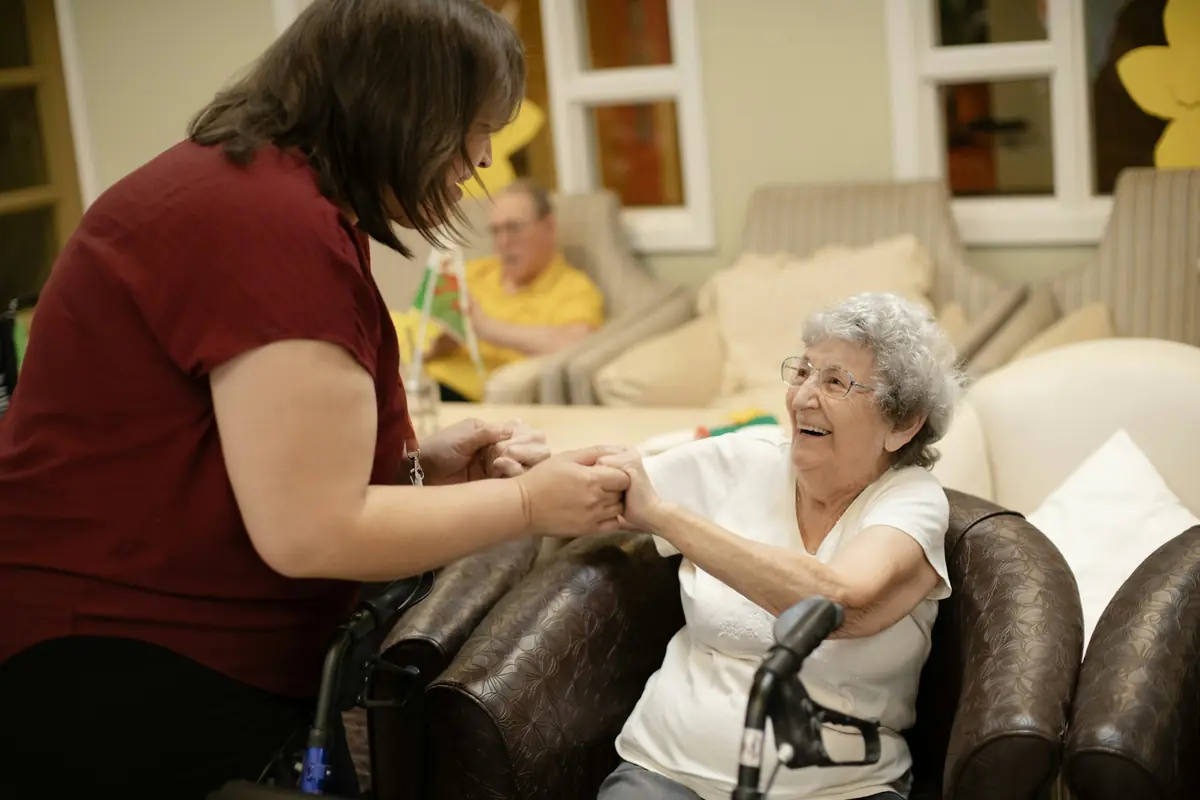
A caregiver helping an older woman stand up with a walker
Caring for yourself, too

Caregivers need support as well

  • 01

    Use the equipment

    Transfer aids, bed rails and shower seating protect your back as much as their balance.

  • 02

    Ask for help early

    Family, neighbors, faith communities and local agencies often want to help — they just need a specific ask.

  • 03

    Keep a simple log

    Note medicines, readings and questions for the next appointment in one place.

  • 04

    Plan for resupply

    Set a reminder before personal care supplies run low so nights don't become emergencies.

General information onlyThis guide is general information, not medical advice. A doctor, nurse, physical therapist or occupational therapist can recommend changes specific to your loved one's needs.

Want a second set of eyes on your plan?

Tell us about the home and the person you're caring for — we'll help you prioritize.